
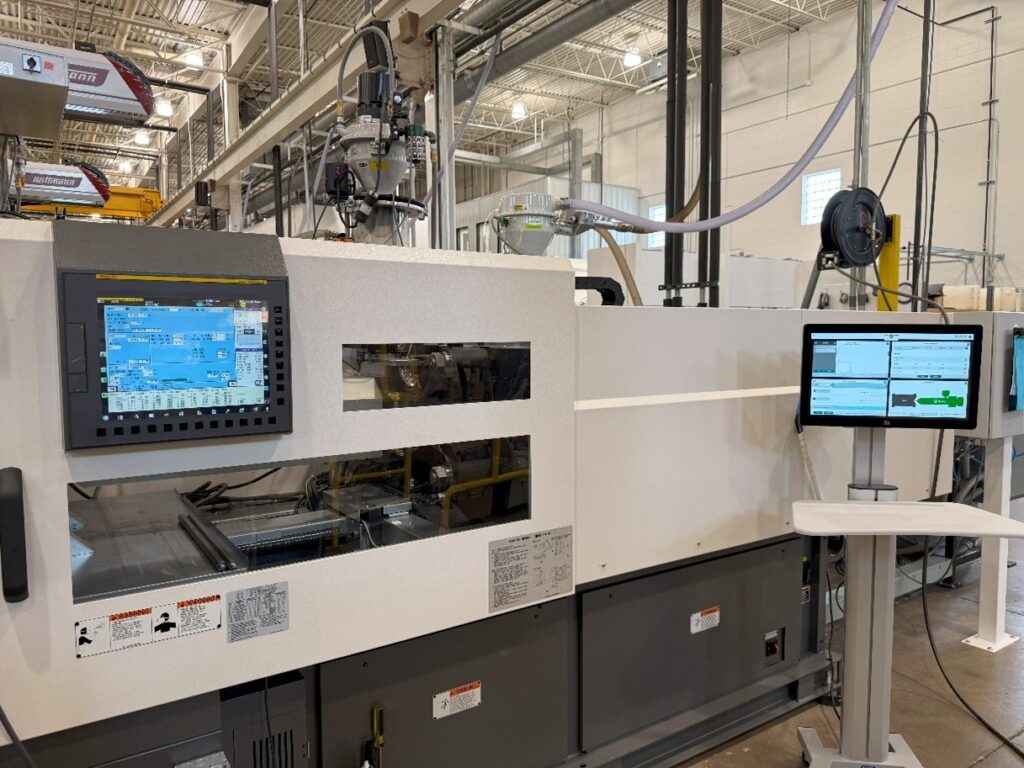
Scientific Injection Molding – Why It Matters
Scientific Injection Molding: What it is and Why it Matters
In modern plastics manufacturing, achieving consistent quality and repeatable performance is critical. Yet many injection molding operations still rely on trial‑and‑error techniques, operator adjustments, and machine‑focused settings that cannot fully account for material behavior inside the mold.
Scientific injection molding provides a more accurate, data‑driven approach—one that focuses on the plastic itself rather than just the machine.
At 7th Street Solutions, we help manufacturers implement scientific molding principles rooted in proven methodologies, including those taught at top plastic engineering schools, such as Ferris State University, and other leading plastics engineering programs. These principles emphasize process understanding, measurement, and control—ensuring consistent results across every production run.
What Is Scientific Injection Molding?
Scientific injection molding is a structured methodology that uses engineering principles, material science, and real‑time data to establish and control a stable molding process. Rather than adjusting machine settings based on part appearance alone, this approach focuses on how the material flows, fills, packs, and solidifies inside the mold.
Specifically, scientific molding emphasizes:
- Understanding plastic material behavior under heat and pressure
- Separating the molding process into fill, pack, and hold phases
- Establishing process windows based on measurable data
- Using cavity pressure and temperature as indicators of consistency
- Developing repeatable processes independent of operator and material variability
This disciplined, engineering‑based approach allows manufacturers to create a “known good process” rather than relying on guesswork.
Why Scientific Injection Molding Matters
The importance of scientific injection molding becomes clear when consistency, quality, and efficiency are critical. Small process variations can lead to defects, scrap, and inefficiencies that compound over time.
Scientific molding matters because it:
- Eliminates process variability by controlling key parameters
- Ensures consistent part quality across shifts, machines, and facilities
- Reduces reliance on operator skill and subjective decision‑making
- Improves process stability, even with material or environmental changes
By focusing on the root causes of variation, manufacturers can prevent problems instead of reacting to them.
Building a Process Based on Material Behavior
A core concept emphasized in within scientific injection molding principles is that injection molding should be controlled based on material behavior—not just machine settings.
Traditional methods often rely on:
- Injection pressure setpoints
- Machine position or time‑based control
- Visual inspection of parts
Scientific injection molding instead focuses on:
- How the plastic fills the cavity
- When the cavity becomes volumetrically full
- How pressure is transferred during packing
- How cooling affects part stability and shrinkage
By understanding and controlling these factors, manufacturers can create processes that are both repeatable and transferable.
Improving Quality Through Data‑Driven Process Control
One of the most significant advantages of scientific injection molding is its impact on quality. Data replaces guesswork, allowing manufacturers to detect and correct issues before defects occur.
Key quality improvements include:
- Reduced part variation and tighter tolerances
- Improved surface finish and structural integrity
- Lower scrap and rework rates
- Enhanced traceability and compliance
At 7th Street Solutions, we integrate tools such as RJG process monitoring and cavity pressure sensors, data acquisition systems, and advanced controls to support this level of precision.

Increasing Efficiency and Reducing Waste
Scientific injection molding does not just improve quality—it also enhances efficiency. By establishing a stable, optimized process, manufacturers can reduce waste and improve throughput.
Benefits include:
- Faster and more repeatable startup conditions
- Reduced downtime due to fewer process adjustments
- Improved material utilization
- Higher overall equipment effectiveness (OEE)
These gains translate directly into lower production costs and improved profitability.
Integrating Technology and Automation
Modern scientific injection molding relies on advanced technologies to collect and analyze data. Systems such as RJG platforms, cavity pressure sensors, and integrated automation solutions provide the insights needed to maintain control.
7th Street Solutions supports manufacturers by:
- Integrating process monitoring systems into molding operations
- Implementing automation to reduce variability
- Developing dashboards for real‑time performance visibility
This integration ensures that scientific molding principles are applied consistently and effectively.
Scaling Scientific Molding Across Operations
A key advantage of scientific injection molding is its scalability. Once a process is properly developed and validated, it can be replicated across machines, shifts, and facilities.
Manufacturers can:
- Standardize best practices across production lines
- Train teams using consistent, data‑driven methods
- Accelerate new product introductions
- Continuously improve using historical data and analysis
7th Street Solutions helps customers implement scalable systems that maximize the impact of scientific molding.
Why Manufacturers Partner with 7th Street Solutions
Successfully implementing scientific molding requires both process expertise and automation integration capabilities. 7th Street Solutions brings these elements together to deliver measurable results.
Manufacturers choose us because we provide:
- Deep understanding of plastics processing and material behavior
- Integration of advanced monitoring and control systems
- Vendor‑agnostic solutions tailored to real manufacturing environments
- Long‑term support for continuous improvement
We work closely with customers to ensure scientific injection molding principles are applied effectively and sustainably.
Contact 7th Street Solutions to learn how scientific injection molding can enhance your operations.